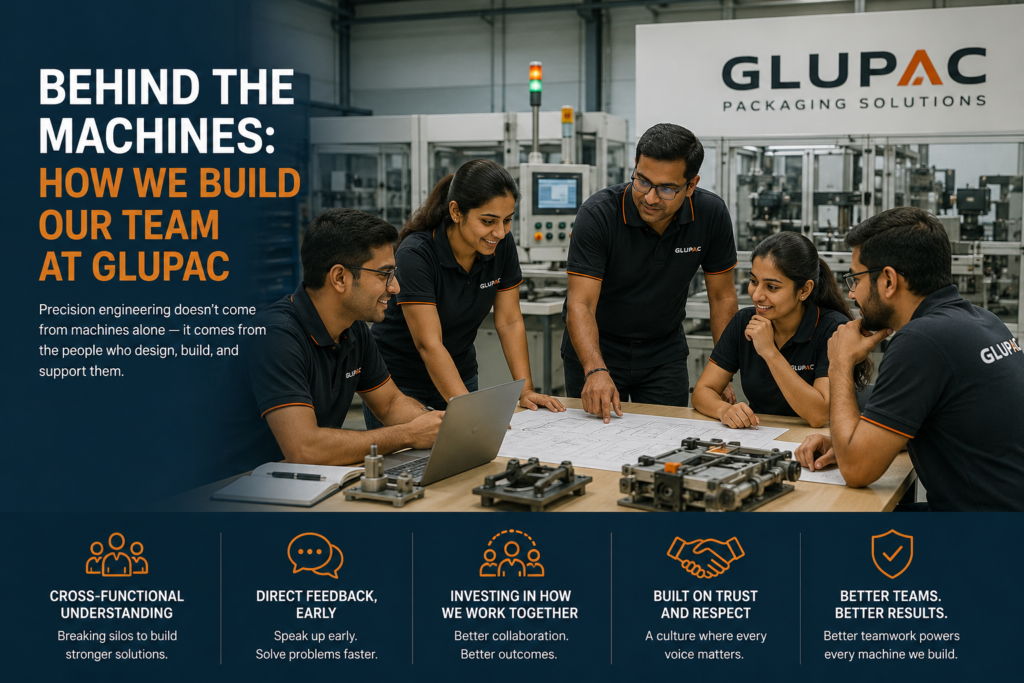
Precision engineering doesn’t come from machines alone, it comes from the people who design, build, and support them. Here’s a look at how we think about team and company culture at Glupac.
Most of what we share here is about the machines, cartonators, sealing systems, the engineering behind a clean, reliable seal on a box moving down a production line. But precision manufacturing isn’t just a product of good design. It’s a product of the team behind it: engineers who catch a tolerance issue before it becomes a customer problem, support staff who understand a client’s production line well enough to troubleshoot it over a phone call, and a culture where people feel comfortable flagging a concern before it becomes a bigger one.
As we’ve grown, we’ve been intentional about building that culture rather than assuming it would happen on its own. A few of the practices that have made a real difference for our team:
Cross-Functional Understanding
In a manufacturing business, it’s easy for engineering, production, and client support to operate as separate silos that only interact when something goes wrong. We’ve worked to change that by having team members spend time understanding what the other side of the business actually deals with day to day — an engineer sitting in on a support call, a production lead walking through a design review. It’s a small habit, but it means fewer surprises and better decisions when something needs to move fast.
Direct Feedback, Early
In precision manufacturing, a small unaddressed issue on the floor can turn into a much bigger one by the time it reaches a client. We’ve tried to build a culture where flagging a concern early is normal and expected, not something that only comes up after a problem has already occurred. That’s meant creating regular, low-stakes moments for the team to raise what’s not working, rather than waiting for a formal review cycle to surface it.
Investing in How the Team Works Together, Not Just What It Builds
It’s tempting, in an engineering-driven business, to focus entirely on the technical roadmap and treat team dynamics as something that will sort itself out. We’ve found the opposite to be true — some of our best process improvements have come out of deliberately setting aside time to talk about how the team collaborates, not just what it’s building next. We’ve drawn on some structured team building activities to make that time genuinely useful rather than just a generic offsite — practical exercises that map to real decisions our team actually faces, not icebreakers for their own sake.
Why This Matters to Our Clients, Not Just Our Team
None of this is abstract for us. The teams that install and support our sealing and cartoning machines are the same people who show up when a client calls with an urgent production issue. A team that communicates well internally, catches problems early, and genuinely works well together shows up as fewer delays, faster support response, and more reliable machines on the floor. Investing in our team isn’t separate from investing in product quality — it’s part of the same thing.
As Glupac continues to grow, this is a part of the business we plan to keep being intentional about — not because it’s a nice addition to the engineering work, but because it’s foundational to it.